Educational guide
Dilution Guide
Why Dilution Matters in Research In peptide research, proper dilution is an important part of handling lyophilized (freeze-dried) compounds. The choice of diluent can influence solubility, stability, and consistency during laboratory work. Because peptides var
This guide cannot diagnose a condition or recommend a personal treatment plan. Discuss medical questions with a qualified professional.
Why Dilution Matters in Research
In peptide research, proper dilution is an important part of handling lyophilized (freeze-dried) compounds. The choice of diluent can influence solubility, stability, and consistency during laboratory work. Because peptides vary in structure, sequence, and physicochemical properties, dilution guidance is
based on best practices rather than one universal rule.
Understanding Peptide Dilution
Peptides are commonly supplied in lyophilized form and must be reconstituted prior to use in research environments. Selecting an appropriate diluent helps support:
- Structural integrity and stability
- Consistent solubility in aqueous systems
- Reduced risk of degradation related to pH or handling variability
The optimal diluent depends on the characteristics of the individual peptide.
Acetic Acid as a Solubility Aid (Exception)
In certain cases, mild acidification (commonly 0.6% acetic acid) may improve dissolution for peptides that are hydrophobic, aggregation-prone, or protein-like in structure.
Acetic acid is not required for most peptides and should be considered a compound-specific exception, rather than a routine default.
How to Use the Dilution Table
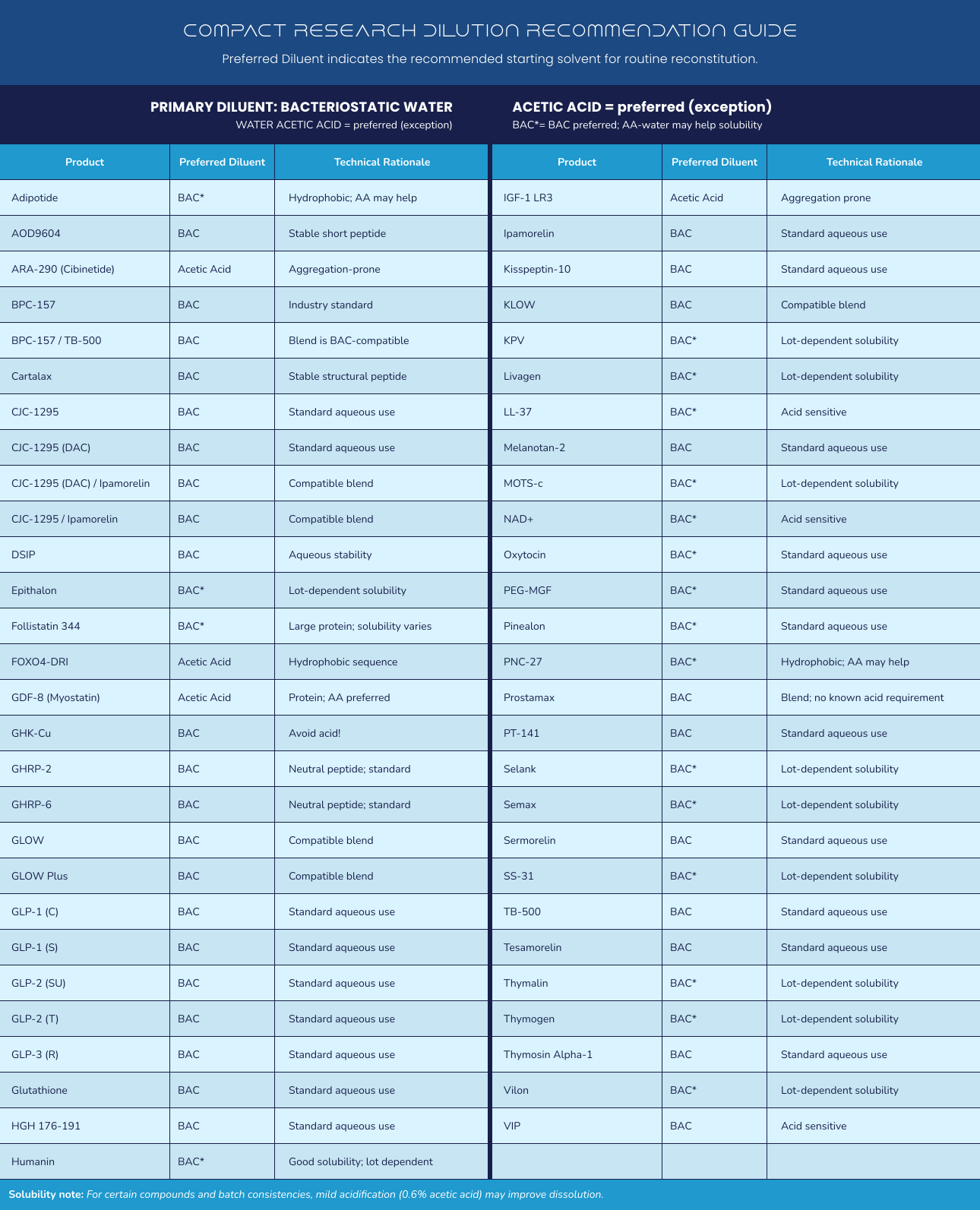
The dilution table below provides guidance on the recommended starting diluent for each peptide:
- BAC
Bacteriostatic water is preferred for routine reconstitution. - BAC*
Bacteriostatic water is preferred, but the compound may show solubility variability or sensitivity depending on batch consistency or handling. Additional care is recommended. - Acetic Acid
Acetic acid is commonly preferred for initial reconstitution due to known solubility or stability characteristics.
Best Practices (General Handling Reference)
Research focused on immune modulation, inflammatory signaling, and host-defense pathways.
This area examines peptides studied for their interaction with innate and adaptive immune systems.
- Use appropriate laboratory technique when working with peptides and diluents
- Store reconstituted solutions according to standard research handling practices
- Minimize exposure to air and contaminants
- Clearly label solutions with preparation date and diluent used
Commitment to Research Quality
Pure Health Peptides is committed to providing high-purity research compounds and supporting materials with transparency and consistency.
All products are offered for research use only and are not intended for human or animal use.
Frequently Asked Questions (Dilution Guide)
Why is bacteriostatic water listed as the primary diluent
Bacteriostatic water is widely used in research settings because it provides reliable aqueous solubility for most peptides and contains a preservative that helps limit microbial growth in multi-use research vials. In research contexts, bacteriostatic water is commonly abbreviated as BAC, which is the notation used throughout the dilution table. For these reasons, BAC is recommended as the standard starting diluent unless otherwise indicated.
What does “BAC*” mean in the dilution table?
“BAC*” indicates that bacteriostatic water (BAC) is the preferred starting diluent, but the compound may exhibit solubility variability or sensitivity depending on batch characteristics or handling conditions. These compounds may require additional care during reconstitution, and acidification is not routinely required.
When is acetic acid used for peptide dilution?
Acetic acid may be used as a solubility aid for specific peptides that are known to be aggregation-prone, hydrophobic, or protein-like in structure. It is considered a compound-specific exception and is not required for most peptides.
Does this guide provide dosing or usage instructions?
No. This dilution guide is provided solely as a research handling reference. It does not provide dosing, administration, or usage instructions, and all products are offered for research use only.
This guide reflects general research handling practices and does not replace laboratory-specific protocols